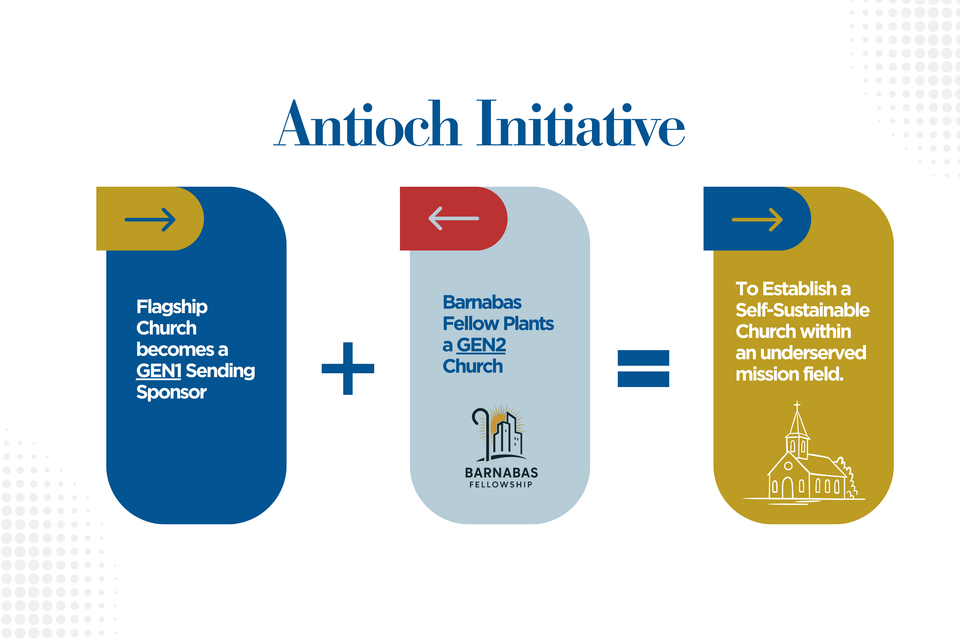
[GEN1] Flagship Churches who areestablished biblically and shepherdshealthy congregations that are able and willing to support, train, and send [GEN 2] churches. These flagship churchespartners with The Barnabas Fellowship into underserved and hard places through the Antioch Initiative.
A [GEN1] Flagship Church:
May be inside or outside the underserved field
Maintains doctrinal alignment and elder governance
Possesses the capacity to host or support residency pathways
Commits tolong-term partnership, not transactional giving
"Faithful churches helping faithful churches"
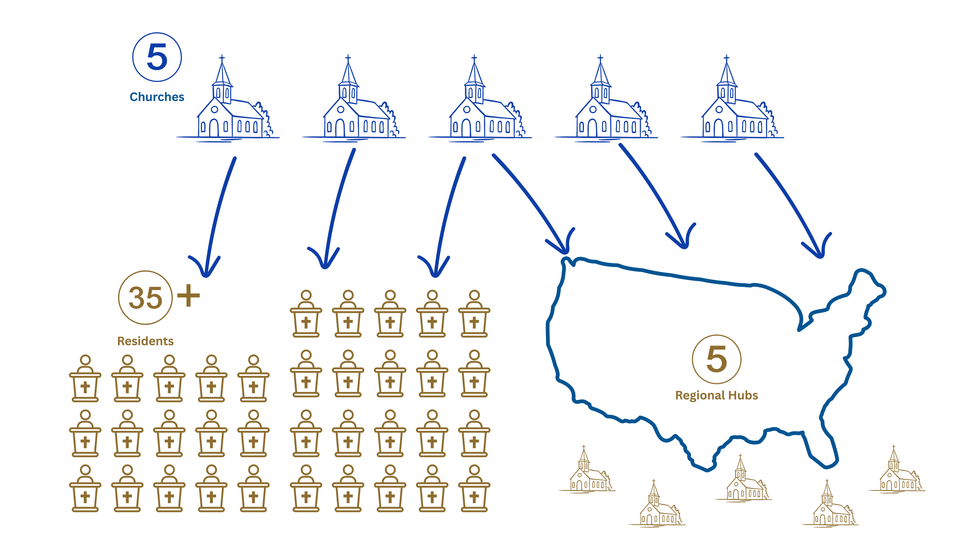
We have 5 churches that are committed to deploying in targeted mission fields while equipping churches to become self-sustainable. Our vision is to launch 35+ residents (prospective missionary pastors) and 5 regional hubs by 2030.
How Does The Antioch Initiative Work?
The Antioch Initiative operates through a stage-based framework called theStages of Sustainable Growth.
Each stage represents clear, observable milestones that demonstrate a church’s readiness to multiply responsibly.
This framework serves 3 purposes:
Accountability– growth is measured, not assumed Clarity– churches know what maturity requires Confidence– donors know where and why resources are deployed
Targeted Gateway Cities Geography:
Ohio (Dayton, Columbus, Cincinnati, Cleveland),
Tennessee (Memphis),
Georgia (Atlanta),
Florida (Orlando),
Texas (Dallas),
Mississippi (Jackson),
California (Los Angeles, and Mid-Valley)
Maryland/DC (Baltimore)
These GATEWAY cities represent pastors who have contributed to the Barnabas Fellowship. This is not an exclusive list, we are willing to expand and receive more prospective Fellows.
The Strategic Role of the Flagship Church
Flagship Churches serve as the spiritual, structural, and financial anchors of the Antioch Initiative—extending their health and wisdom to strengthen emerging churches and establish enduring gospel presence in hard places.
The Antioch Initiative recognizes that multiplication in hard places requires strength from stable places. Many of the churches best positioned to support planters, residents, and emerging congregations are not located in distressed mission fields themselves. Yet their doctrinal health, leadership maturity, and financial stability make them indispensable partners in establishing enduring gospel presence where the need is greatest.